Zambia’s Home-Grown School Meals Programme: Nourishing the Future, Strengthening Communities
"Every child has the right to basic education, to be free from hunger and to have adequate food of acceptable quality."
Guest Blog by Malalu Mulundika, Director School Health and Nutrition at Ministry of Education, Zambia
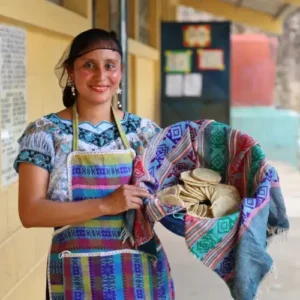
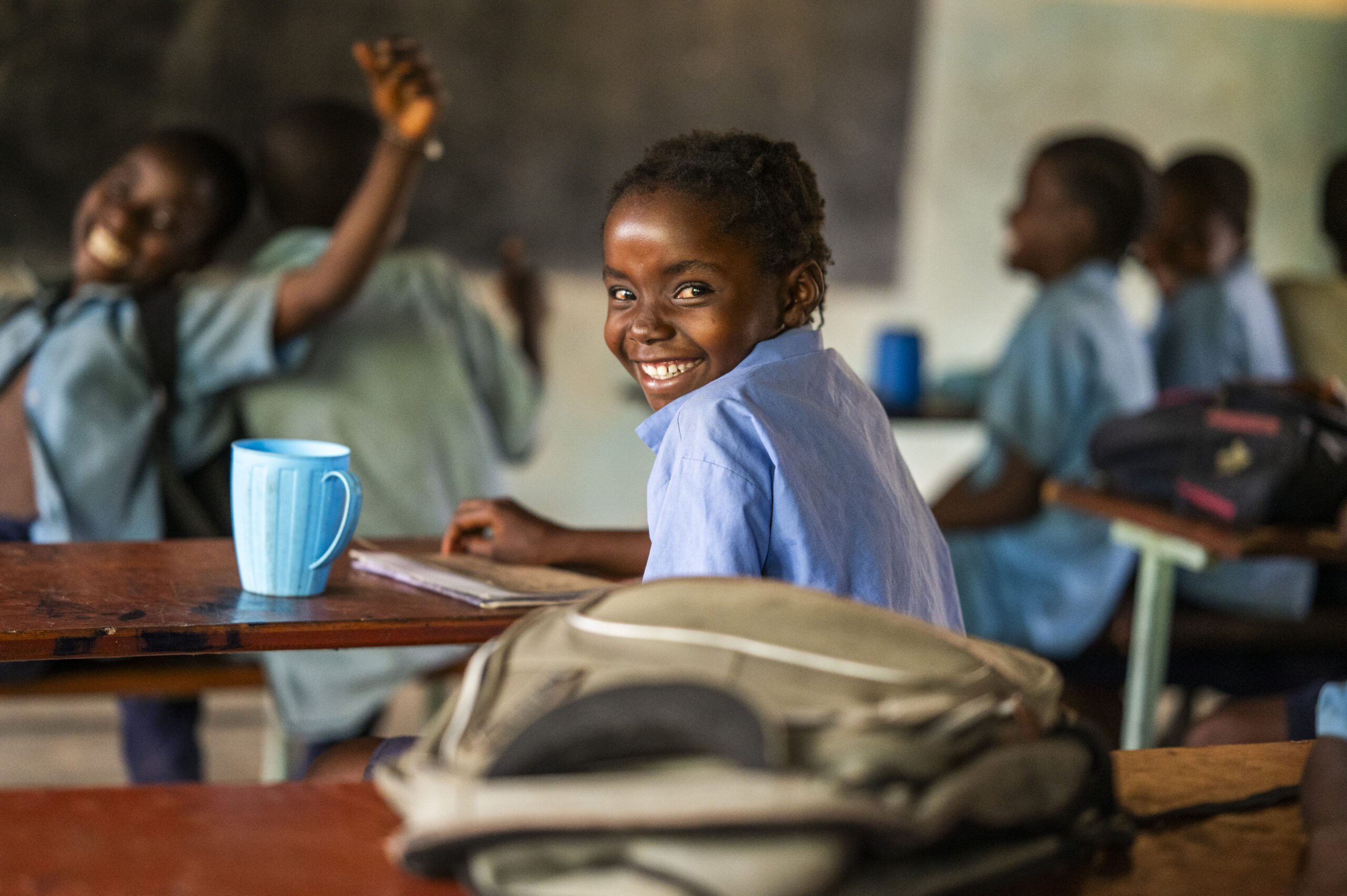 Photo credit: © 2026 Mary's Meals
 A nation cannot thrive when its children are hungry. Zambia’s Home-Grown School Meals programme (HGSM) is built on exactly that recognition. Children carry the promise of the country’s future, and ensuring they are well nourished is one of the most powerful ways to reduce poverty and malnutrition in their communities.
A Programme Zambia Owns
School feeding in Zambia dates back to independence in 1964. After decades of interruption and revival, the Government assumed full ownership of its own programme in 2019 under the Ministry of Education. The country continues to value the support of UN agencies, international NGOs, and government institutions whose technical and financial contributions have been central to the programme’s growth.
As of today, the HGSM reaches over 5.6 million learners across 116 districts. This also includes refugee children in settlements within those districts. By the end of 2026, the government aims to further scale up the programme to reach 6 million learners.
Zambia is working hard to sustainably finance its national school meals programme, and domestic investment is expected to grow as the programme expands. In 2022, the government covered 27% of the programme’s USD 8.7 million budget, with development partners funding the rest, and importantly, school feeding now has its own dedicated budget line. Still, ensuring steady funding, improving infrastructure, and keeping food deliveries reliable throughout the year remain key priorities.
What Children Eat
Zambia’s school meals are locally rooted. Menus vary by province based on what is grown, culturally familiar to the communities they are serving, and seasonally available. Spanning six food groups, they include traditional beverages like thobwa and mabisi alongside eggs, fish, and legumes.
What does this mean in practice? In Muchinga Province, a child’s meal might include fresh milk, bondwe, and mangoes in season. In Eastern Province, cowpeas, and tamarind. In Western Province, cassava, rice, and mabuyu.
A Market for Those Who Grow
For Zambia, the school meals programme is as much an agricultural and economic policy as it is a nutrition one. The programme continues to create stable markets for smallholder farmers while building the infrastructure for local food systems to grow. The country has an estimated 1.6 million smallholder farmers, most with limited access to stable buyers.
When the programme transitioned to decentralised procurement, districts were provided with funding and given authority to determine how food is sourced locally. From that shift, farmer cooperatives emerged, giving smallholders a direct route to sell within their own communities. Since 2021, direct procurement through farmer cooperatives has been formalized in ten districts, creating a predictable and structured route to market for local producers.
Building Resilience, Not Just Meals
The school meals programme is also a resilience infrastructure. When El Niño-induced drought swept through Zambia in 2023 and 2024, the Government responded with the National Drought Response Plan, placing school meals at its center and expanding coverage to 2.2 million additional children across 36 drought-stricken districts. Alongside emergency feeding, the programme has invested in climate-smart agriculture to strengthen the food systems that supply it, ensuring that when the next shock comes, the programme is more likely to continue without interruption.
See You in Lusaka
From 2-5 November 2026, the Government of Zambia, together with the Global Child Nutrition Foundation, is excited to host the next Global Child Nutrition Forum in Lusaka. The Forum will bring together government leaders, technical experts, and partners from around the world to share innovations and advance efforts to ensure every child receives nutritious school meals.
Zambia isn’t hosting because it has all the answers. It’s hosting because it is actively strengthening its school meal programme, clear‑eyed about the challenges ahead, and eager to learn with countries navigating a similar journey.
Zambia looks forward to welcoming you to this year’s Forum. To learn more and register, visit the Forum’s webpage here.
“Every child has the right to basic education, to be free from hunger and to have adequate food of acceptable quality.” – Zambia’s National Strategy on Home-Grown School Meals 2020–2024, Guiding Principles.
About the Author
Malalu Muchengwa Mulundika is the Director of School Health and Nutrition for the Ministry of Education in Zambia. Malalu Mulundika is a distinguished civil servant who started her career nearly 30 years ago as a secondary school teacher. In the time that has followed, she has worked in progressively more senior roles for the Government of Zambia, including as Director of Human Resources and Administration for the Ministry of Gender and Child Development and as Assistant Director Scholarships and Technical Assistance at the Public Service Management Division. Mrs. Mulundika holds a Bachelor of Arts in Education from the University of Zambia and a Master’s Degree in Management of Development from the University of Turin.